 AvioADSB
ADS-B Antenna Outdoor Mounting: A Practical Guide
How to do ADS-B antenna outdoor mounting: secure the mast, weatherproof the connector, seal the cable entry, then connect your receiver to AvioADSB.
ADS-B antenna outdoor mounting comes down to three jobs: fix the antenna firmly in a high, clear spot, keep moisture out of the connector, and bring the cable indoors through a sealed hole. Do those well and an outdoor antenna will keep feeding for years with no attention. This guide covers each step for a first-timer.
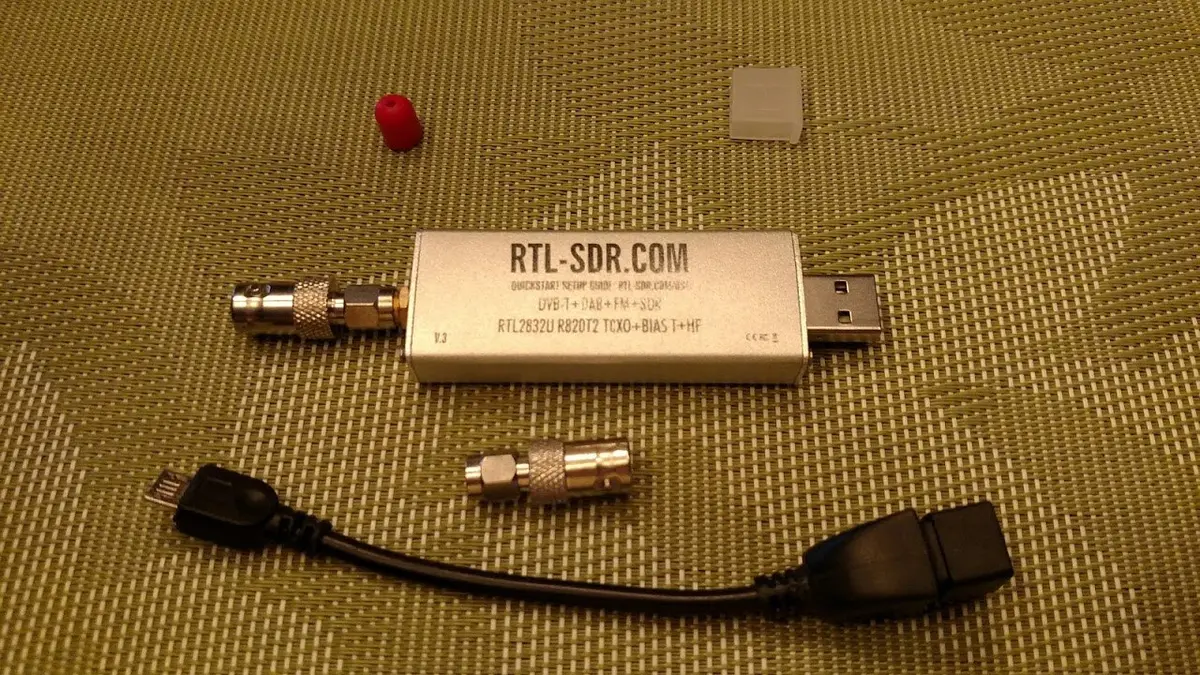
An RTL-SDR dongle. Photo: Joeceads, CC BY-SA 4.0, via Wikimedia Commons.
Choose the spot first
ADS-B is line of sight. rtl-sdr.com says the antenna should not be obstructed by things like trees or buildings, and advises putting it up as high as possible. The signal is vertically polarized, so mount the antenna upright. Our antenna placement guide explains how to judge a location, and the 1090 MHz antenna guide helps you pick the antenna itself.
Fix the antenna so wind cannot move it
FlightAware's build notes say that when mounting outdoors you should make sure the antenna is securely fixed so high wind cannot dislodge it. They list a few ways to do it:
- A tripod
- A chimney mount
- A base made from PVC pipe, with the antenna attached to the pipe using U-bolts
Pick whichever suits your roof, balcony or garden. Work only where you can do so safely, and if the spot is high or near power lines, ask a professional installer.
Weatherproof the connector
Moisture in an outdoor connector causes corrosion. FlightAware's page says this can be prevented by wrapping the connector with self-fusing tape, hand moldable plastic or self-amalgamating tape. Check that the cable end matches the antenna before you seal anything. Most external antennas use an N-type female connector, so the cable needs an N-type male end, while dongles often need an SMA adapter at the other end.
Bring the cable indoors
- Run the coax from the antenna to the window or wall where it will enter.
- Drill a hole through the wall and seal around the cable with flexible sealant, as FlightAware suggests.
- Keep the run short. rtl-sdr.com notes that long runs of cheap coax reduce signal strength significantly, and that you can place the dongle close to the antenna and use a powered USB cable to reach the computer. Our coax cable loss guide has more on choosing cable.
Test, then share
Start your decoder and watch the aircraft count and message rate for a day before you add tape and sealant to anything permanent. If numbers look low, use the low message rate checklist.
An outdoor antenna that hears planes is exactly what the network needs. Feeding AvioADSB takes a few minutes and can run next to any network you already feed, as the multi-network guide shows.
Ready to connect your receiver?
Connect your receiver in a few minutes: create a free account, add a receiver and run the feeder script. Still choosing parts? Start with the AvioADSB hardware list.