 AvioADSB
ADS-B In Mandate: What the Deal in Congress Means
The ADS-B In mandate deal in Congress explained: what was agreed, what is still open, and what it changes for people who run an ADS-B receiver at home.
An ADS-B In mandate moved a step closer in the United States on November 17, 2026, when House and Senate committee leaders announced an agreement in principle on aviation safety legislation. Under the deal, aircraft that are already required to broadcast their position with ADS-B Out would also have to receive those broadcasts with ADS-B In. It is not law yet, and it does not change what a home receiver picks up today.
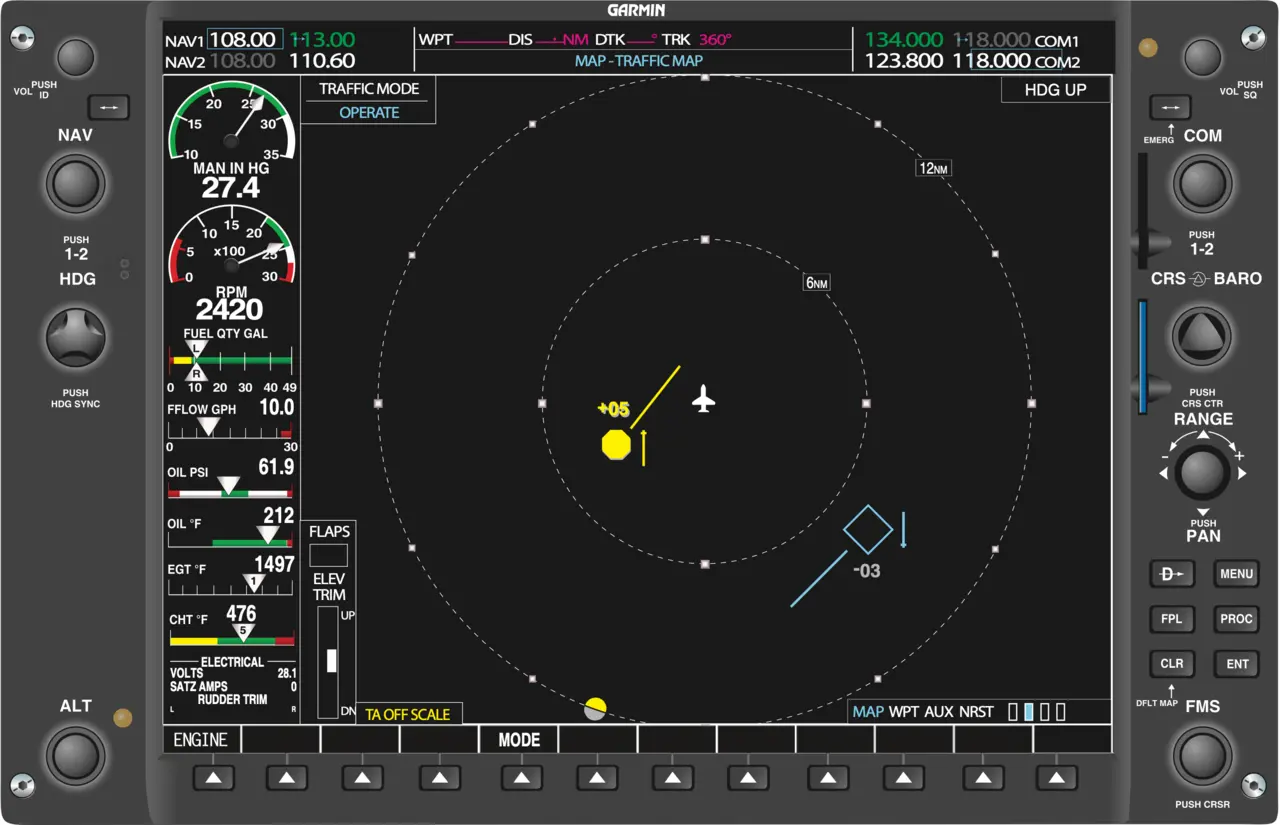
Nearby traffic on a cockpit display, the kind of picture ADS-B In gives pilots. Image: Federal Aviation Administration, public domain, via Wikimedia Commons.
What the ADS-B In mandate deal says
According to the Senate Commerce Committee announcement, the framework is backed by the leaders of the Senate Commerce and House Transportation and Infrastructure committees. Its core is an ADS-B In requirement first proposed in the Senate's ROTOR Act (S. 2503): any aircraft required to send ADS-B Out would also be required to receive it.
The legislation follows the January 2025 midair collision between an airliner and an Army helicopter near Ronald Reagan Washington National Airport, which killed 67 people. CBS News reports that the NTSB has recommended ADS-B In as a required safety feature since 2008.
What is still open
Three things are worth knowing before reading this as a done deal:
- It is an agreement in principle. The committee says lawmakers are still finalizing bill text that reconciles the Senate's ROTOR Act with the House's ALERT Act of 2026 (H.R. 7613). The stated goal is to pass it before the end of the current Congress.
- Military aircraft are unresolved. Rules for military aircraft flying in civilian airspace are still being negotiated with the Armed Services committees, as AVweb also reports.
- No compliance date is confirmed. The announcement does not give one for the combined bill.
What changes for a home ADS-B receiver
Short answer: nothing changes in what you receive. ADS-B In is the listening side inside the aircraft, and a ground receiver is already a listener. As our guide to ADS-B Out and ADS-B In explains, your antenna picks up the ADS-B Out broadcasts that aircraft send, and it never transmits anything.
Because the civil part of the deal covers aircraft that already carry ADS-B Out, it would not by itself put new aircraft on your map. The part to watch is the military side. CBS News notes that the House's ALERT Act would require military crews to broadcast their location during non-sensitive missions. Whether that survives into the final bill is exactly what is still being negotiated. Until then, the usual reasons some aircraft don't show on flight trackers still apply.
You can already listen to the same broadcasts
The mandate debate is a reminder of how open ADS-B is. The broadcasts a cockpit would be required to receive are the same ones anyone on the ground can pick up with an RTL-SDR dongle, a 1090 MHz antenna and a Raspberry Pi. Every receiver only hears aircraft within its line of sight, so each new volunteer station fills in a piece of the shared map.
Already feeding another network? You can feed AvioADSB from the same receiver with one extra connector line.
Build a receiver and join AvioADSB
Want to see ADS-B Out traffic over your own house? Start with this hardware list. Once your receiver is running, connect it to AvioADSB in a few minutes, no account needed.