 AvioADSB
Why Some Aircraft Don't Show on Flight Trackers
Why some aircraft don't show on flight trackers: military flights, blocked aircraft, low altitude blind spots and no ADS-B. See how a home receiver fills gaps.
Why some aircraft don't show on flight trackers: the plane may not broadcast ADS-B at all, its data may be filtered or blocked before it reaches a public site, or its signal may never reach a receiver because nothing is listening nearby. The last reason is the one you can do something about.
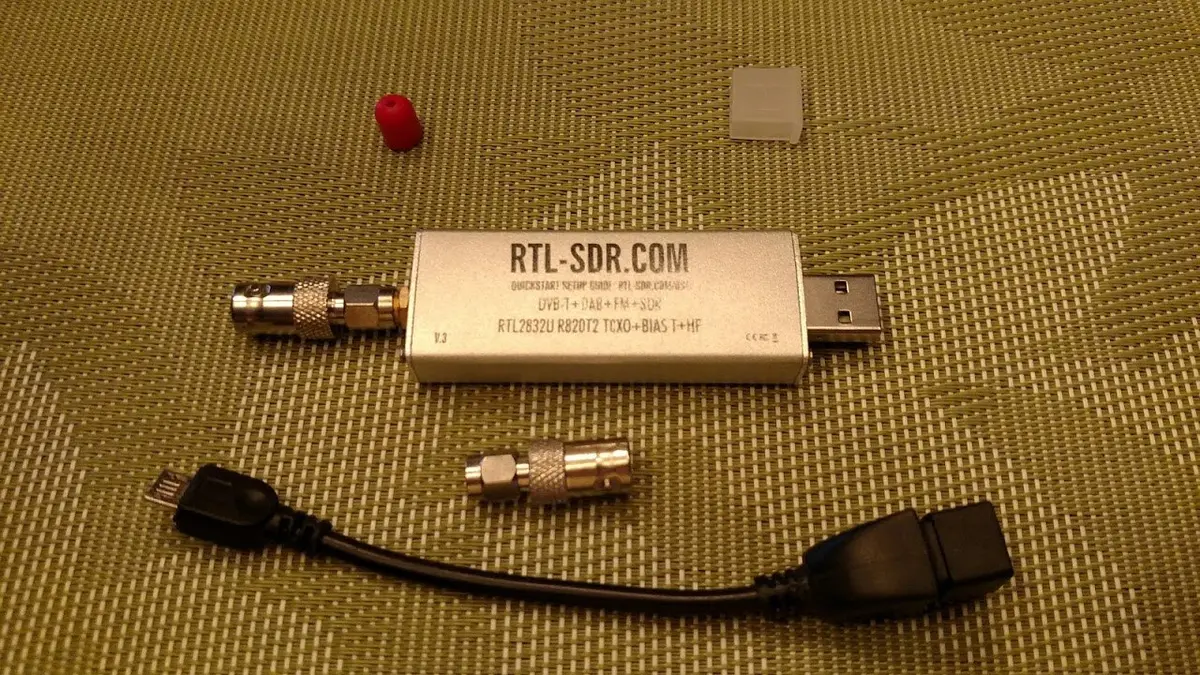
An RTL-SDR dongle. Photo: Joeceads, CC BY-SA 4.0, via Wikimedia Commons.
The plane is not broadcasting ADS-B
Not every aircraft is required to use ADS-B, especially in general aviation, so some smaller planes and helicopters never send a position at all, according to this overview of missing aircraft on tracking sites. Some military and government aircraft also do not transmit, or have their data filtered before public platforms see it.
The data is blocked or filtered
In the United States the FAA runs two privacy programs. LADD (Limiting Aircraft Data Displayed) limits the aircraft data the FAA shares with third parties. PIA (Privacy ICAO Address) swaps an aircraft's permanent ICAO address for a temporary one that is not tied to a named operator in the registry. NBAA notes that ADS-B Out broadcasts can still be received by non-FAA, third-party sources, which is why the choice of data source matters.
Many mainstream sites honor these programs. The overview above says ADS-B Exchange does not filter such data.
The signal never reaches a receiver
ADS-B signals travel line of sight, and the RTL-SDR project advises keeping the antenna clear of trees and buildings and as high as possible. A low-flying helicopter, crop duster or VFR plane can pass through a blind spot where no receiver has a clear view, particularly in rural or mountainous areas.
More receivers on the ground means fewer blind spots. Some aircraft send ADS-B without a position, and a network with enough stations can still locate them with MLAT.
What a home receiver changes
A receiver hears what is actually in the air around you, whatever a given site chooses to display. If you live somewhere with thin coverage, your station may be the only one that ever sees certain low flights. That is the most direct way to help a community network grow where it is needed.
Start with what an ADS-B receiver costs and where to mount the antenna. A basic setup is an RTL-SDR dongle, a 1090 MHz antenna and a small computer such as a Raspberry Pi. If you already feed another network, you can feed AvioADSB from the same receiver.
Fill the gap in your area
Ready to see what flies over your roof? Start with the AvioADSB hardware list, or if your receiver already runs, connect it in a few minutes.