 AvioADSB
ADS-B Filter and LNA: Do You Need Them?
Do you need an ADS-B filter and LNA? See when a 1090 MHz filter or low noise amplifier helps, where to mount it, and how to feed AvioADSB afterwards.
Most people do not need an ADS-B filter and LNA to get a working receiver. An RTL-SDR dongle and a decent 1090 MHz antenna will already show planes. A filter helps when strong nearby signals drown out aircraft, and an LNA helps when a long cable eats the signal. Here is how to tell which one, if either, your setup needs.
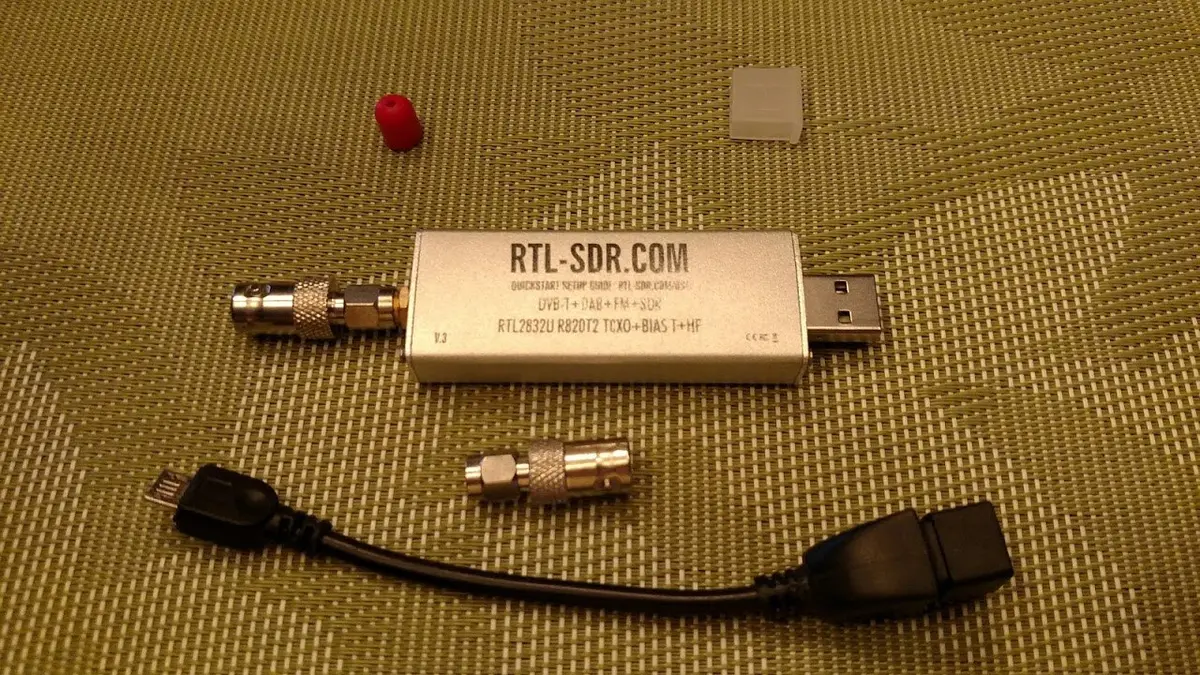
An RTL-SDR dongle. Photo: Joeceads, CC BY-SA 4.0, via Wikimedia Commons.
What a 1090 MHz filter does
ADS-B on 1090 MHz shares the radio spectrum with other strong transmitters, such as broadcast FM, cell and TV towers. RTL-SDR.com notes that these can overload a dongle and degrade ADS-B reception, and that a 1090 MHz filter blocks interfering signals on other frequencies.
FlightAware says filtering is generally recommended in urban environments and generally not recommended in rural ones. Its Pro Stick Plus has a built-in filter with a 1,075 to 1,105 MHz pass band, and FlightAware says most users will not need an external 1090 MHz filter.
What an LNA does
A low noise amplifier (LNA) boosts a weak signal before it gets noisy. RTL-SDR.com says an LNA can be very beneficial with an RTL-SDR because of the dongle's noise figure, and that it can offset coax losses. The same article states that you can receive ADS-B with an RTL-SDR Blog V3 without one, so it is an improvement, not a requirement.
An LNA amplifies noise along with the signal. The wiedehopf wiki makes the same point about gain: if noise is louder than the signal, no amount of gain will let you receive it.
Do you need either one?
Work through this before spending money:
- Check the basics first. Antenna height, clear sky and a short cable matter more. See antenna placement and low message rate fixes.
- Measure your cable. FlightAware advises keeping loss below 6 dB, with runs preferably under 15 meters (50 feet). If you cannot shorten the run, an LNA at the antenna end is the usual answer.
- Live near strong transmitters? Cities and spots near broadcast or cell towers are where a filter helps most. A dongle with a filter built in is the simplest fix, see the dongle comparison.
- Test one change at a time. Note your message rate and range, add one part, and compare.
Where to mount an LNA
Put it as close to the antenna as possible. The RTL-SDR Blog ADS-B Triple Filtered LNA is described by its maker that way, with two 1090 MHz SAW filters built in and bias tee power from RTL-SDR Blog V3 dongles, so no separate supply is needed. The vendor listed it at USD 39.95 when we checked, though it showed as out of stock.
A DIY 1090 MHz SAW filter component is about $10 on eBay according to RTL-SDR.com, but it needs soldering. If you are building your own antenna, start with the DIY antenna guide and add parts later.
Check the product's power requirements before connecting it. A bias tee sends DC down the coax, so do not enable it for equipment that does not expect power on the cable.
Keep the hardware budget in proportion
AvioADSB's hardware guide puts a dedicated ADS-B antenna at about $20 to $40 and an RTL-SDR dongle at around $25. Treat a filter or LNA as an upgrade after you have a receiver running and a baseline to compare against.
Next step
Once your receiver is decoding aircraft, connect it to AvioADSB in a few minutes. Still choosing parts? Start with the hardware list.
Sources: RTL-SDR.com ADS-B guide, FlightAware Pro Stick, FlightAware optional build guide, wiedehopf ADS-B wiki.