 AvioADSB
What Do ADS-B Feeders Get in Return?
What do ADS-B feeders get in return for sharing data? See the perks networks offer, what AvioADSB gives you, and whether feeding is worth it.
What do ADS-B feeders get in return for sharing their data? It depends on the network. Typically you get access to the shared data, statistics about your own station and sometimes a free account upgrade, and you help fill coverage gaps on a map that anyone can use. Nobody gets rich from feeding, so the honest answer is: a useful tool and a hobby with a purpose.
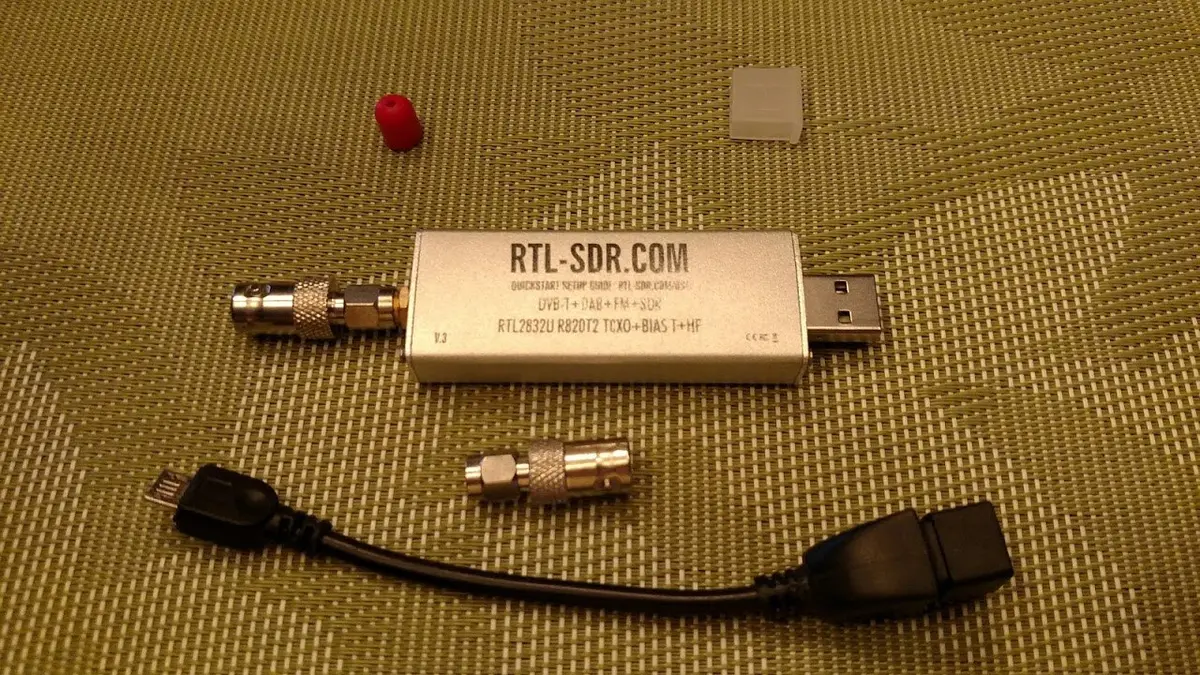
An RTL-SDR dongle. Photo: Joeceads, CC BY-SA 4.0, via Wikimedia Commons.
What feeders get from AvioADSB
AvioADSB is a community network, and the rewards are simple and written down on the getting started page and the API page:
- A Contributor API key. While any of your receivers has shared data in the last 7 days, your key gets 1 request per second and 10,000 requests per month, instead of the anonymous 100 per day.
- Bigger queries. Contributors can run point queries up to 250 nm, against 100 nm for anonymous users, and use the global
/v1/aircraftsnapshot. - A free account and dashboard. You see whether your receiver is online and how many aircraft it is reporting.
- MLAT. You can enable multilateration from the dashboard, which locates aircraft that do not broadcast a position. See the hardware guide for the details.
Your exact antenna location is stored privately. Public maps show it rounded to about 28 km.
What other networks offer
Perks vary, so check the network you are considering. As one example, FlightAware's PiAware build page lists what users sending ADS-B data receive: a public listing on flightaware.com, up-to-the-second live data from the local device, highlighted track logs, detailed site statistics, and a free Enterprise account that it values at USD 99.95 per month, subject to FlightAware's terms.
Other networks have their own rewards and rules. Read each network's terms before you connect, especially how your data may be used.
The part that is not on a price list
Feeders also get things no plan includes:
- A local aircraft map. Your decoder shows planes overhead on your own network, whether or not you share anything.
- Range and signal graphs. Tuning your antenna to reach farther is a satisfying project, and our antenna placement guide shows where to start.
- Real coverage. Every receiver covers some area that nobody else does. In places with few stations, yours may be the only one hearing low-flying aircraft.
What feeding costs you
A basic setup costs roughly USD 100 in parts, according to FlightAware's build page, and our cost breakdown shows where the money goes. After that you need power for a small computer and a network connection.
Can I feed more than one network?
Yes. One receiver can serve several networks at once. If you already feed one, you can add AvioADSB without new hardware: see feeding multiple networks from one receiver.
Start with the hardware list, then join
If the rewards sound worth it, begin with the AvioADSB hardware list. When your receiver shows aircraft locally, connect it to AvioADSB in a few minutes and watch the dashboard turn to Online.